
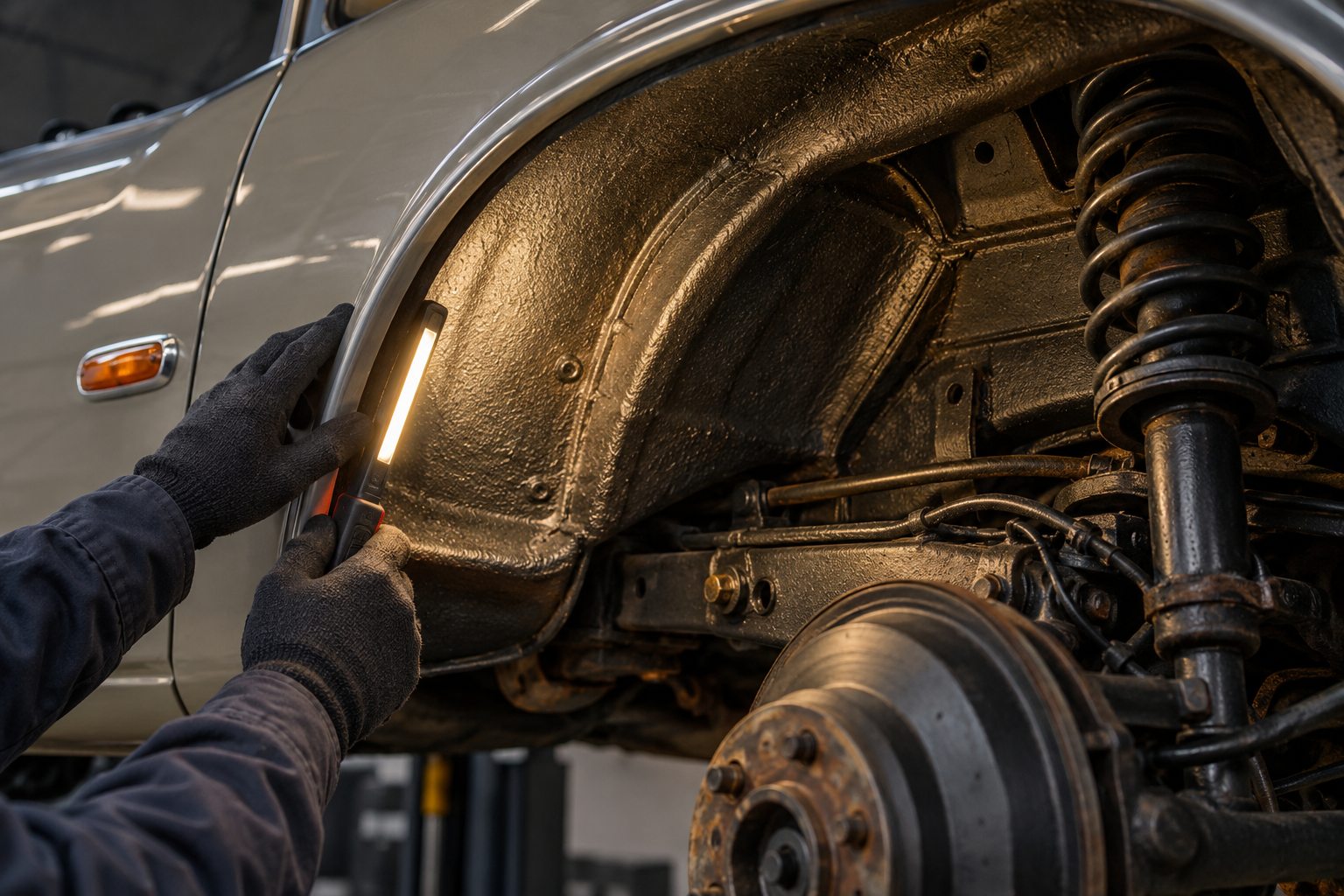
Start with the condition of the car and the building. Buying a coating before identifying water entry or damaged metal can leave the real problem unresolved.
| What you notice | First action | Next guide |
|---|---|---|
| Water after rain | Record the location and investigate entry | Damp garage checks |
| Rust around hidden sections | Ask for an inspection | Cavity wax |
| Flaking underside coating | Have the underlying metal assessed | Underbody protection |
| A car unused over winter | Make a vehicle-specific plan | Winter storage |
Make a baseline record
Photograph accessible areas in good light and date the pictures. Do not crawl beneath a vehicle supported only by a jack. A competent workshop can inspect areas you cannot safely reach.
Separate cosmetic marks from safety concerns. GOV.UK makes clear that a current MOT does not guarantee roadworthiness. Seek professional advice about uncertain structural areas, brakes or mounting points before driving.
Measure the environment
Keep a record of temperature, relative humidity, rain and visible condensation. The garage humidity check compares readings with published appliance operating ranges; it cannot certify a garage as free from corrosion risk.
Keep treatment instructions and schedule follow-up inspections. One application should not become a reason to stop checking the car.
Sources
Sources & checks
Checked 2026-10-25. Read the original instructions before acting.